
Shared house or student house next door
The house next door is let room by room. Students or young professionals, and someone seems to move in or out every few months. What you notice adds up: voices in the garden past midnight, music through the wall, bikes against your wall and a rubbish bag that has sat beside the bin for days. And when you want to say something, you have no idea who to say it to.
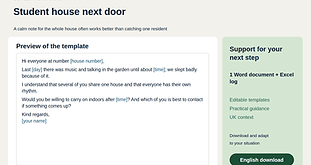
Speak to the residents themselves first, ideally with a friendly note for the whole house. Describe what you noticed, when and what the effect was, and ask for one specific arrangement and one named contact. Only if that does not help, contact the landlord, owner or letting agent. Don’t rely on assumptions about students; most residents have no idea what their house sounds like from your side.
The example messages and the incident diary help you talk this through calmly and keep track of what you agree, even when new residents arrive. Only use what you heard or saw yourself and do not record names or assumptions about individual residents.
What do the rules say?
Sharing a house is legal. In England and Wales a house where at least three tenants from more than one household share facilities is an HMO; large HMOs with five or more tenants need a council licence, and many councils license smaller ones too, with conditions on management and anti-social behaviour. Noise or accumulated rubbish can be a statutory nuisance under the Environmental Protection Act 1990 if it unreasonably and substantially interferes with the use of your home; the council must then investigate. An occasional get-together rarely meets that test.
How to approach it
1. Note the date, time, what you heard or saw and the effect; note quiet weeks too.
2. Leave a friendly note for the whole house with one specific request and ask who you can contact.
3. Put what you agree briefly in writing and ask the landlord or agent to include it in the house rules.
4. Can’t agree? Contact the landlord with your incident diary, try community mediation, or ask the council whether the house is licensed and report an ongoing problem.
Tips for your message
Describe what you noticed, not what you think is going on. A sentence like ‘On Friday there was music in the garden until 1.30 am; could you carry on indoors after 11 pm?’ usually works better than ‘You have a party every weekend’. Always ask for a named contact, so you don’t have to knock on the door again and again.
This is general information, not legal advice.
Pack
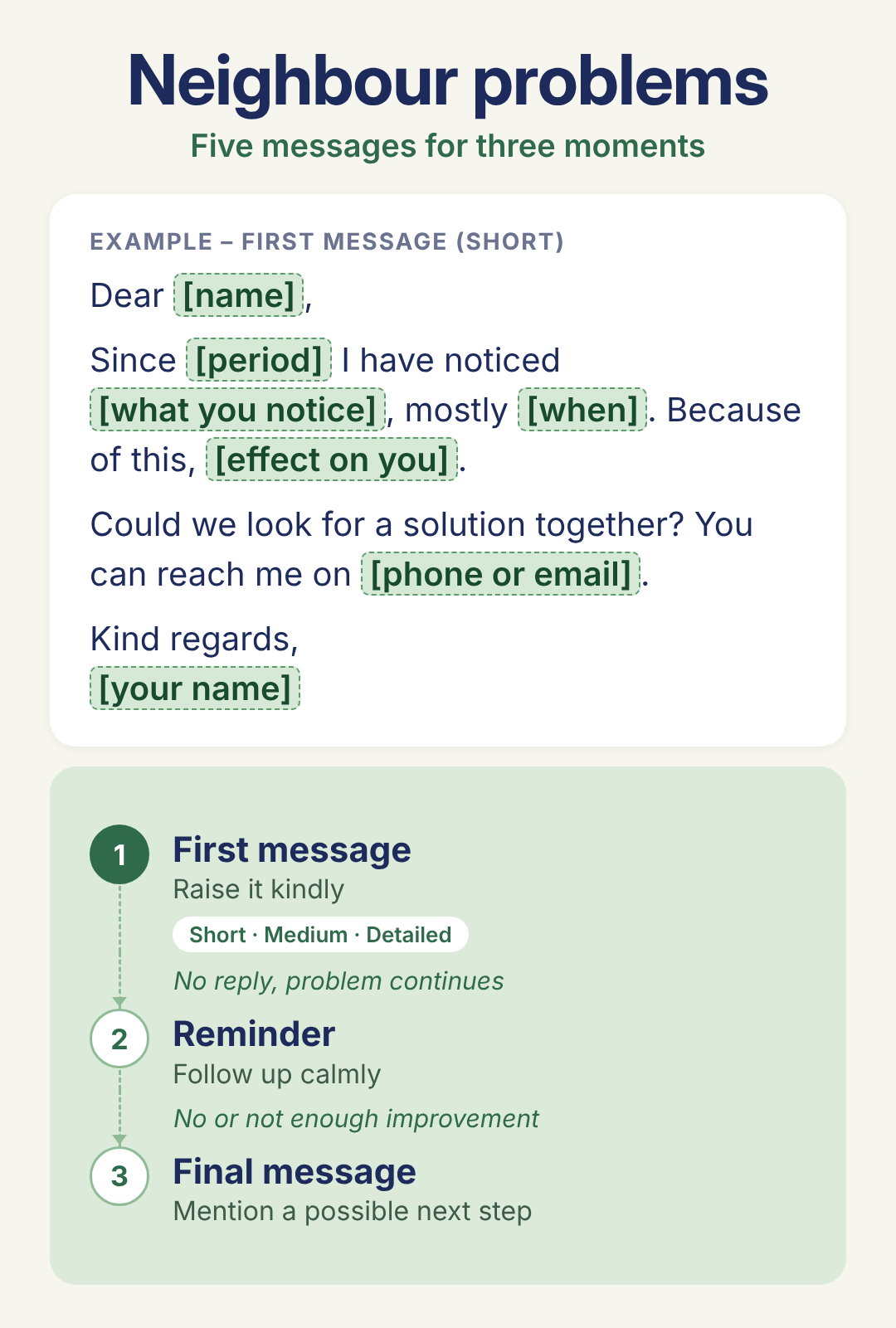
Five example messages: a first message in three lengths (short, medium and detailed), a reminder and a final message, a guide to choosing and using them, background information and UK context, and an incident diary (Word, plus a free Excel version).
The image shows a general example; the messages in the pack are tailored to this situation.
Why CalmNotes?
Based on experience with neighbour problems and community mediation
Focused on de-escalation
Ready to use straight away
Choose an appropriate step. If contact feels unsafe, seek help first.