
Damp, mould and smells from next door
A damp patch on the party wall, mould in the corner of the bedroom, a smell in the hallway or silverfish coming in along the pipes: when a neighbouring home has been neglected for a long time, you often notice it first on your side of the wall. You can’t see the cause, so don’t assume you know what it is.
A cluttered or neglected home also often says something about how the person living there is doing: illness, old age, bereavement, money worries or hoarding. So describe only what you see, smell or measure yourself, do not judge how someone lives, and ask for one specific, realistic step, such as an inspection of the wall or gutter from both sides.
The example messages and the incident diary help you raise this calmly and without blame and keep track of what you agree. Only use facts you know and do not mention guesses about anyone’s health.
What do the rules say?
In England and Wales, premises in such a state as to be prejudicial to health or a nuisance, and accumulations that are prejudicial to health or a nuisance, can be statutory nuisances under the Environmental Protection Act 1990; if the council is satisfied one exists, it must serve an abatement notice. Councils also have powers to deal with filthy or verminous premises. If your neighbours rent, their landlord must keep the structure and exterior in repair (Landlord and Tenant Act 1985, section 11), and your own landlord has the same duty for damp and mould in your home.
How to approach it
1. Note when you noticed the damp, smell or pests and take dated photos of your own wall or outside wall, not of your neighbour’s home.
2. Send a friendly message that only describes what you notice on your side, with one suggestion, such as having a plumber look at it together.
3. Offer to help find a solution or to approach the landlord or managing agent together, and agree a date to check whether it has helped.
4. Nothing changes? Report it in writing to the landlord, the managing agent or the council’s environmental health team. If you are worried about the person themselves, you can raise a safeguarding concern with the council’s adult social care team without judgement.
Tips for your message
Describe the effect, not the cause. A sentence like ‘For a few months I have seen a damp patch on our shared wall; could we get a plumber to look at it together?’ works better than ‘Your house is a mess’. Do not mention diagnoses or guesses about anyone’s health.
This is general information, not legal advice.

Pack
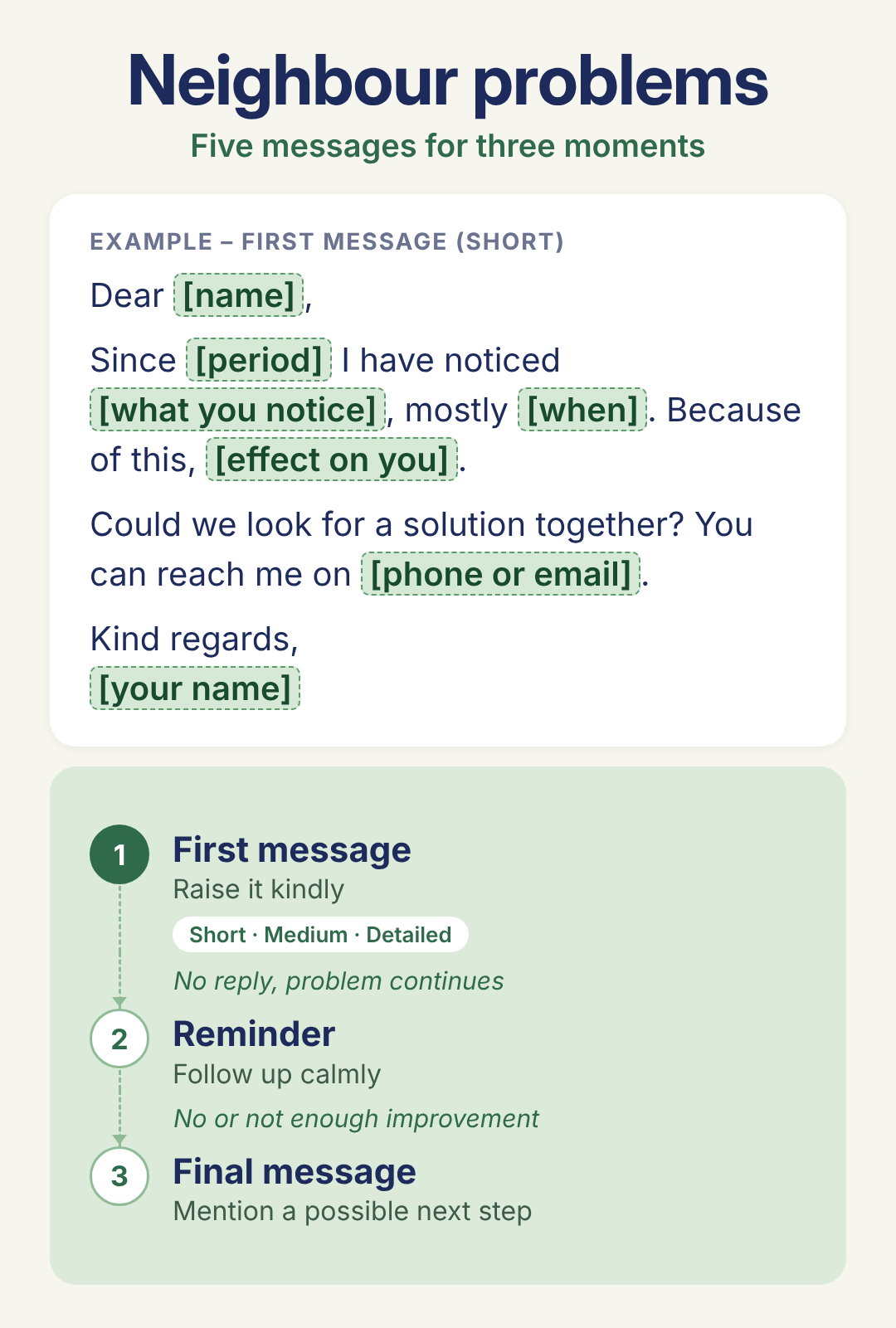
Five example messages: a first message in three lengths (short, medium and detailed), a reminder and a final message, a guide to choosing and using them, background information and UK context, and an incident diary (Word, plus a free Excel version).
The image shows a general example; the messages in the pack are tailored to this situation.
Why CalmNotes?
Based on experience with neighbour problems and community mediation
Focused on de-escalation
Ready to use straight away
Choose an appropriate step. If contact feels unsafe, seek help first.