
Neighbour’s extension or planning application
A letter from the council or a remark over the fence: the neighbours are building. For them it is a long-held wish; for you an extension, dormer or tree felling may mean a patio in shade, a window overlooking your garden or a changed view.
Ask to see the drawings and describe specifically what you expect on your side. Suggest a change that makes the difference for you, such as a slightly lower extension, obscure glazing or a new tree elsewhere, rather than dismissing the whole plan.
The example messages and the incident diary help you talk this through calmly and keep track of what you agree. Only use facts you know and leave room for your neighbours’ interests, such as space for their family.
What do the rules say?
In England, many extensions, dormers and other alterations need planning permission, although smaller ones often fall under permitted development. The council publicises an application with a site notice or a letter to neighbours, and the period for comments is at least 21 days. It weighs overlooking, loss of privacy and loss of light, but generally not loss of a private view or house prices, and neighbours have no right of appeal against a grant of permission. Work near a shared wall may fall under the Party Wall etc. Act 1996, and protected trees need council consent.
How to approach it
1. Look up the application on the council’s planning website, note the date and write the deadline down separately.
2. Send a friendly message asking for the drawings and suggesting one specific change.
3. Put what you agree briefly in writing and ask whether it will also be shown in the plans submitted to the council.
4. Can’t agree? Comment to the council before the deadline; a community mediation service can help get the conversation going again.
Tips for your message
Don’t accuse; describe what you expect. A sentence like ‘I think our patio would be in shade in the afternoon; could I see the drawings?’ usually works better than ‘Your extension is far too big’. Don’t leave your formal comments until after the deadline, even if you are still talking.
This is general information, not legal advice.

Pack
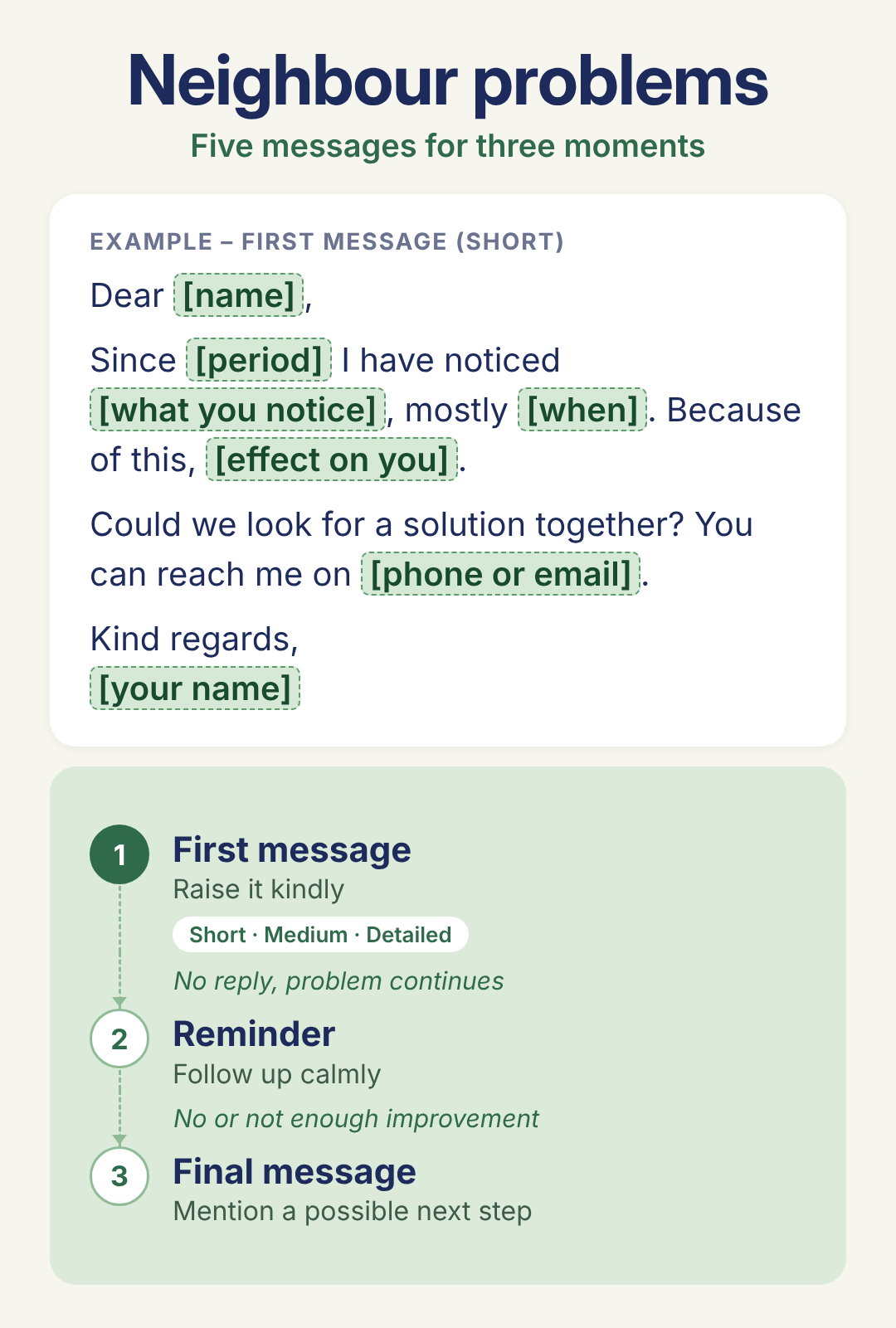
Five example messages: a first message in three lengths (short, medium and detailed), a reminder and a final message, a guide to choosing and using them, background information and UK context, and an incident diary (Word, plus a free Excel version).
The image shows a general example; the messages in the pack are tailored to this situation.
Why CalmNotes?
Based on experience with neighbour problems and community mediation
Focused on de-escalation
Ready to use straight away
Choose an appropriate step. If contact feels unsafe, seek help first.