Footsteps From Upstairs Neighbours: What You Can Do
Thud, thud, thud. Your upstairs neighbours walk across a hard floor and you hear every single step. Or a chair scrapes across the floor late at night, or the children jump off the sofa. Footstep and impact noise is one of the most common complaints in flats. In this article you will read how to recognise it, how to raise it with understanding, and which practical solutions are worth suggesting.
What is impact noise?
Impact noise happens when something strikes the floor or a wall: footsteps, chairs being dragged, things being dropped or a washing machine vibrating. The sound travels through the structure of the building and often reaches you as a dull thud or rumble. It is different from airborne noise, such as music or voices, which travels through the air and through gaps.
It is worth knowing that your upstairs neighbours barely hear their own footsteps. They often have no idea what it sounds like below. This is especially true after a renovation: if carpet has been replaced with laminate, wooden flooring or tiles, the noise downstairs can suddenly be much louder.
Start with understanding
Walking around is part of normal life. You cannot ask your neighbours to stop moving. You can, however, ask whether they would be willing to take it into account. So start the conversation with understanding:
"I know you are just going about your day at home, and I would not want it any other way. But recently I have been hearing every step very clearly, especially late in the evening. Could we perhaps have a look together at whether anything might help?"
You could also invite them round to listen while someone in their household walks across the floor upstairs. That often says more than words ever could.
Practical things to ask for
Ask for something small and realistic. For example:
Felt pads under chair and table legs. Cheap and very effective against scraping chairs.
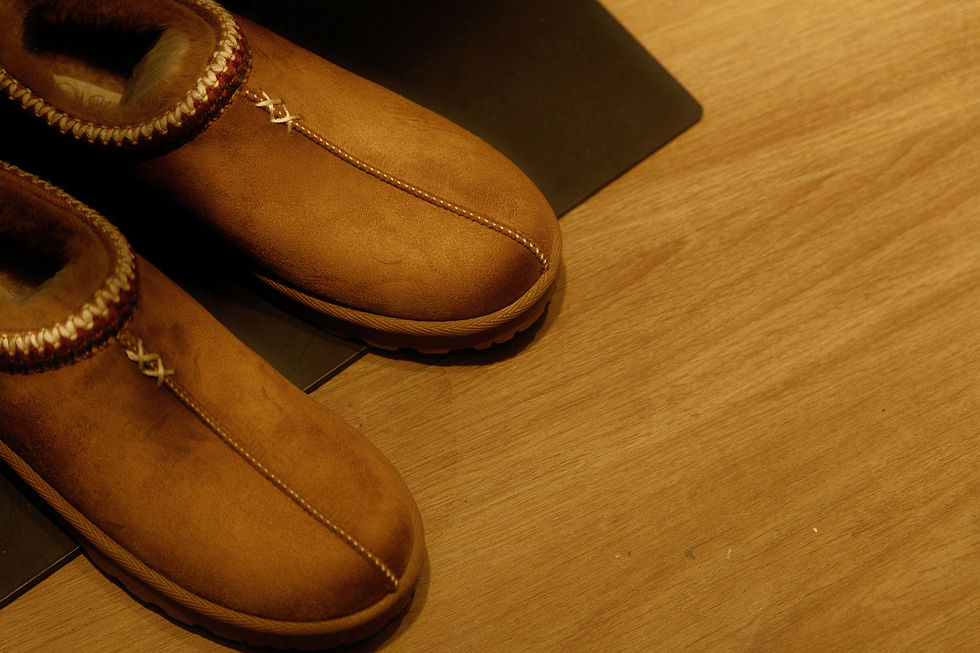
Slippers or soft shoes indoors. Heels and hard soles sound much louder downstairs.
Rugs in areas where people walk or play a lot.
Agreed quiet hours. For example, no washing machine or hoovering after 10pm.
Anti-vibration pads under the washing machine or other appliances that vibrate.
Start with one or two things and agree to check in after a few weeks to see whether it has helped.
Hard floors, leases and building rules
If you live in a block of flats, it can be worth finding out what the lease or the building rules say. Many leases for flats require carpet or suitable acoustic underlay, or ask leaseholders to get permission before changing flooring. If a hard floor has been laid without meeting those terms, the managing agent or freeholder may be able to take it up with the flat owner. If you rent, your landlord or housing association is usually the first point of contact.
Older buildings often have less sound insulation between floors than newer ones, so some noise may be hard to eliminate completely. This is general information, not legal advice.
Keep track of when it happens
Is the noise still disturbing you after you have talked? Then keep a note for a few weeks of when you hear it, how long it lasts and how it affects you. With that log you can be specific in a follow-up conversation, or share it with your landlord, managing agent or a community mediation service.
What often helps in practice
Impact noise is often easier to improve than to remove entirely, so it helps to aim for "noticeably better" rather than silence. Small, low-cost changes such as rugs, felt pads and soft shoes are easy for neighbours to agree to, and agreeing on quieter times late at night and early in the morning can make a real difference to your sleep. Neighbours who have heard the noise for themselves from below are usually far more willing to help.
If friendly conversations have not worked, a community mediation service can help you both find a workable compromise. In flats, the managing agent or freeholder may be able to check whether flooring complies with the lease, and your local council's environmental health team can advise on persistent noise, although ordinary living noise is not always something they can act on.
A calm first message
The Footsteps and impact noise pack gives you editable example messages for thudding, stomping and footstep noise, from a friendly first note to a follow-up, together with a log template so you can keep track of what happens.


Comments