
Neighbour’s cockerel crowing early: what can you do?
Updated: 4 days ago
Backyard chickens are more popular than ever, but if you live next door you may mostly notice the downsides. A cockerel that starts at five in summer, a smell of droppings drifting over the fence on warm days, or rats and flies drawn to the feed. Your neighbours often don’t notice this themselves, or have simply got used to it. This article explains what you can ask for and how to raise it calmly.
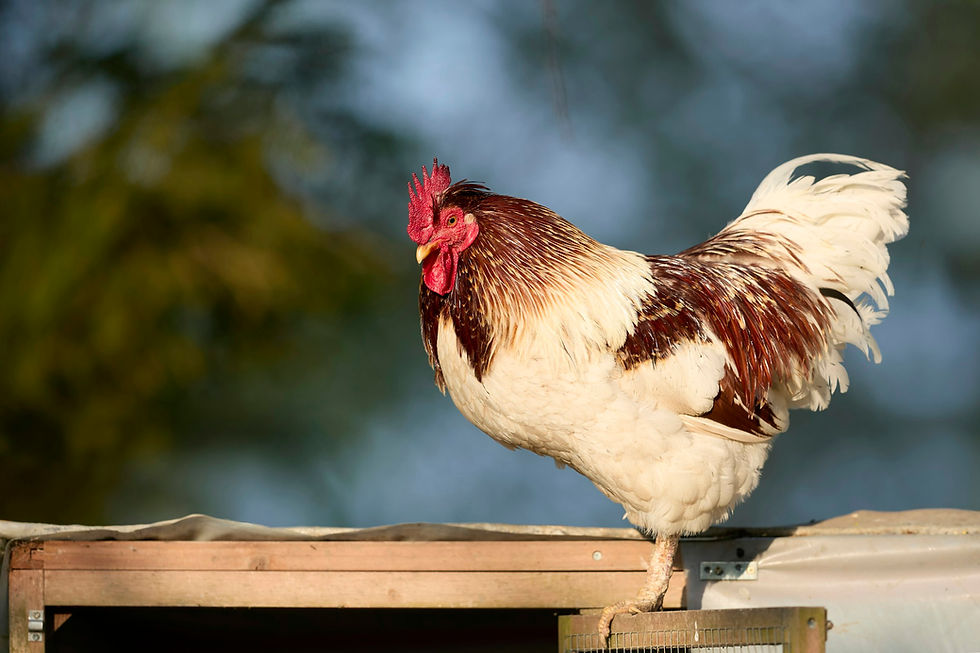
Why a cockerel and a coop are so noticeable
A cockerel doesn’t crow to annoy anyone. He responds to light and to other cockerels nearby, which is why he often starts at first light. In June that can be before 5 am. The sound is high-pitched and carries a long way, especially in the quiet of the early morning.
A coop itself causes little trouble as long as it is kept clean and dry. When that slips, you notice:
Smell. Wet droppings and a crowded run can be smelt in the garden or through an open window on warm days.
Flies. Droppings and stale feed attract flies, which end up on your patio too.
Rats and mice. Feed left in the open and kitchen scraps are a laid table for vermin.
Raise it kindly
Start from the assumption that your neighbours don’t know how it sounds or smells at your place. Say that you have nothing against the birds, and describe exactly what you notice:
"Your cockerel has been starting at around five these last few weeks, and we hear it in the bedroom. I know you enjoy the chickens. Could we look together at whether a small change is possible?"
Pick a calm moment, and never touch the birds or go into your neighbours’ garden.
What can you ask for and agree?
Don’t open by asking for the cockerel to go; small measures often make a big difference:
A dark night-time coop. A cockerel crows in response to light. In a coop that is properly dark at night, he usually starts later.
Letting the birds out later. Keeping the birds in the coop until an agreed time, say 7 or 8 am.
A different spot. Moving the coop further from bedroom windows and the boundary.
Clean and dry. Mucking out the coop and run regularly and keeping them dry in wet weather, so smell and flies drop off.
Feed in a sealed bin. Storing feed in a sealed container, no kitchen scraps in the run and bringing the feeder in at night, so rats have less reason to visit.
Agree a trial period, two weeks for example, and then check together whether it helps.
What are the rules in the UK?
There is generally no rule against keeping a few chickens or a cockerel in an ordinary garden, although a tenancy agreement, lease or the property’s deeds may restrict keeping animals, so it is worth checking. Since October 2024, anyone keeping poultry in Great Britain must register their birds with the government, even if it is only a few hens. Under the Environmental Protection Act 1990, noise from premises and an animal kept in a way that is a nuisance can be a statutory nuisance, and councils can act on it. They look at the circumstances, such as how early and how often the cockerel crows and whether the area is rural or built-up. This article is not legal advice.
Keep a record
Still a problem? Keep a log for a few weeks. Note the date, what time the crowing starts and roughly how often, where you hear it and the effect on you, for example being woken at five. Record smell, flies or rats too, with the time and place. Later you can calmly show what is going on and whether an agreement has helped.
In practice
Many councils publish practical advice for cockerel keepers. Castle Point Borough Council in Essex, for example, advises keeping cockerels as far from neighbouring homes as practical, housing them in a coop that is as dark as possible at night and not letting them out until 8 am, and it points out that crowing at unsociable hours in a built-up area is more likely to count as a statutory nuisance (source: Castle Point Borough Council – Cockerel noise).
If you can’t sort it out together
Send a second, clear letter. Refer to your earlier conversation and mention a few examples from your log.
Try community mediation. A neutral mediator helps you reach an agreement together, as long as both of you take part.
Contact your council. The environmental health team can look into noise, smell or an animal kept in a way that causes a nuisance, and can usually advise on rats.
Help with the first message
The CalmNotes pack on a neighbour’s cockerel and chickens gives you editable sample messages to raise early crowing, smell or vermin calmly, with follow-up messages if nothing changes and a log to keep track of what you notice. More tips are on the page a neighbour’s cockerel and chickens.
Choose a suitable next step
Free incident diary — Record incidents, contact and agreements.
Prepare your records and request for help — Organise your information and prepare a request for help.
Find support — Find out who may be able to help with your situation.


Comments