
Neighbour practising an instrument: how to agree on practice times
Updated: 4 days ago
A neighbour who plays the piano, drums or trumpet is usually just working on a hobby or studying for an exam. Even so, it can come through loudly at your place, especially when it happens at the same time every day and you hear the same scale or rhythm again and again. With good arrangements, making music and living peacefully can usually go together. In this article, you’ll find out why practising carries so far, what you can agree and how to raise it kindly.
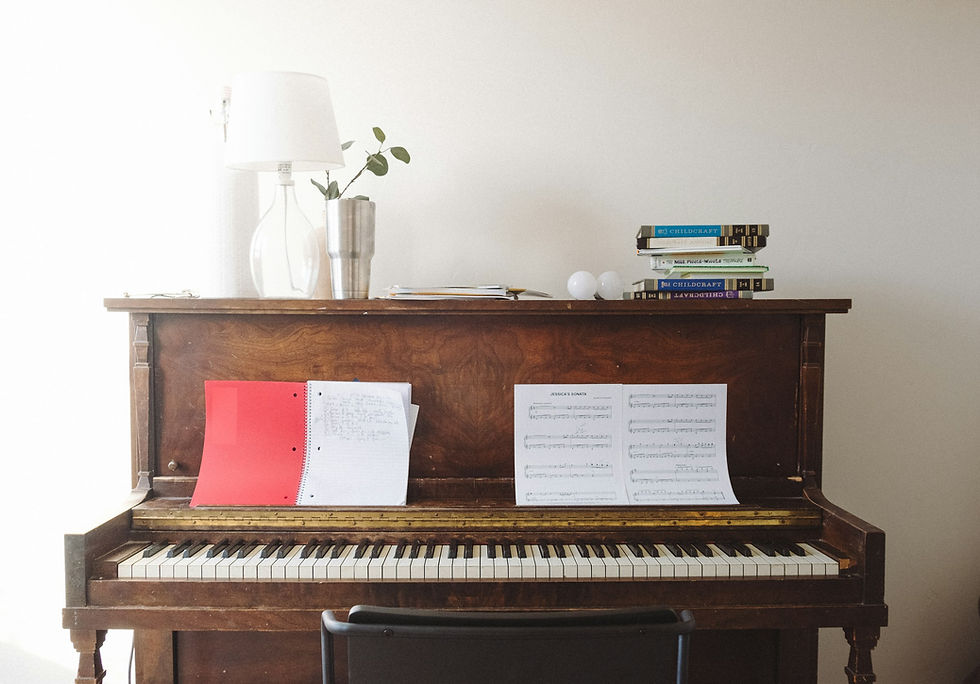
Why you hear your neighbour’s instrument so clearly
Someone practising mainly hears their own playing and concentrates on the notes, not on what goes through the wall. At your end the sound arrives differently. A few things often play a part:
Impact sound. A piano, drum kit or amplifier standing on the floor or against a wall passes vibration into the building. That is why you sometimes hear the piano pedal or bass drum more than the music itself.
Repetition. Practising means playing the same passage ten times. That fixed pattern makes the sound hard for neighbours to ignore.
The type of instrument. Drums, brass and a guitar amplifier carry much further than an acoustic guitar or a quiet singing voice.
The time of day. People who work or study during the day often practise in the evening, exactly when you want to relax or sleep.
The building. In flats and terraced houses with thin party walls or wooden floors, sound travels easily.
Raise it kindly
Your neighbour often has no idea how it sounds at your place. So start by appreciating the hobby and say specifically what you notice, without commenting on the playing:
"It’s great that you play the drums, but after nine in the evening we can hear it clearly in our bedroom. Could we look together at which times work for both of us?"
You could also suggest that someone from your neighbour’s household comes round to listen while the instrument is being played.
What you can agree
Asking someone to stop practising altogether is rarely reasonable, but there is usually a lot you can do:
Set practice times. For example not after 8 or 9 pm, not early in the morning and perhaps a maximum length per day. Then everyone knows where they stand.
A different spot. Keeping the instrument away from the party wall, ideally in a room that is not next to your bedroom.
Damping. Castor cups or a thick rug under a piano or drum kit, a drum riser, or a mute on a brass instrument.
Quiet practice. Practice pads, an electronic drum kit, a silent system in the piano, a digital piano or an amplifier with a headphone output.
Start with one or two small changes and agree a date to check together whether they work.
Are there rules on playing music at home?
In the UK there is no law that says when or for how long you may play an instrument at home; practising is generally treated as an ordinary part of domestic life. Your tenancy agreement, lease or house rules may contain terms about noise, quiet hours or instruments. If noise from a home unreasonably and substantially interferes with the use of yours, your council can investigate it as a possible statutory nuisance under the Environmental Protection Act 1990. Councils look at how loud, how often and how long it is and at what time of day. This article is not legal advice.
Keep a diary
If the noise keeps bothering you, keep a diary for a few weeks. Note the date, start and end time, which instrument you hear, in which room and the effect on you, such as not being able to work or sleep. Also note when it was quiet and whether an agreement helped. That way you can later show specifically when it happens.
In practice
Many councils publish their own advice for people who play instruments at home. Eastleigh Borough Council, for example, suggests avoiding practice between 8 pm and 8 am on weekdays and practising for no more than 45 minutes a day. It also recommends closing windows, not practising in rooms next to a neighbour, using headphones or practice pads, and talking to neighbours to agree suitable times. Advice like this is not a legal limit, but it can be a useful starting point for a friendly conversation.
If you can’t solve it together
Send a second, clear letter. Refer to your earlier conversation and mention a few examples from your diary.
Try mediation. A community mediation service can help you agree practice times together.
Contact your local council. It can explain which rules apply and whether it can investigate.
Do you rent or live in a flat? Then the landlord, housing association or managing agent may play a role.
Help with the first message
The CalmNotes pack for musical instrument practice gives you editable example messages to raise the practising calmly, follow-up messages if nothing changes and a diary to record when it happens. Find more tips and examples on our page about practising a musical instrument.
Choose a suitable next step
Free incident diary — Record incidents, contact and agreements.
Prepare your records and request for help — Organise your information and prepare a request for help.
Find support — Find out who may be able to help with your situation.


Comments